Wangsa House
PROJECT DESCRIPTION
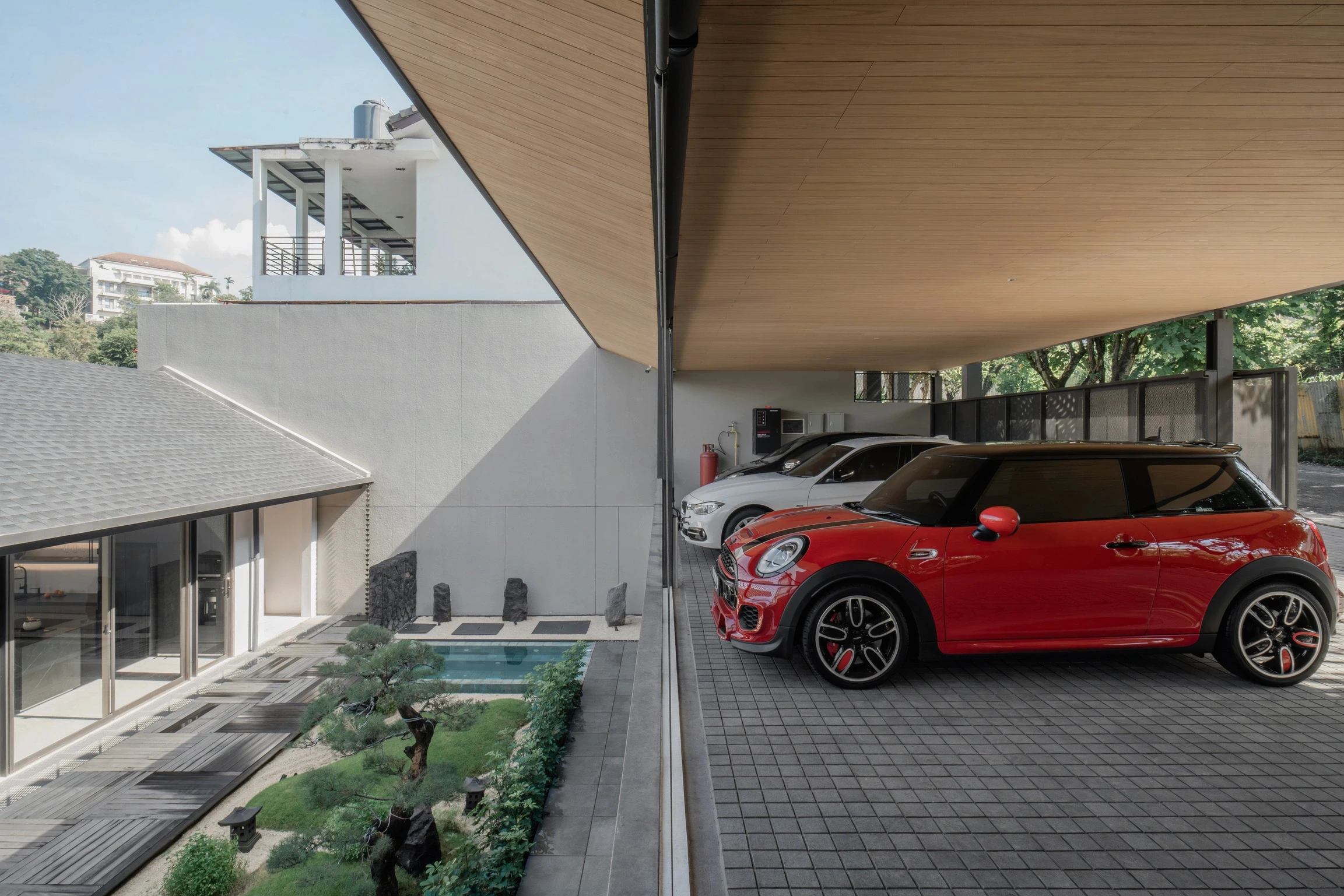
Wangsa House is a private residence completed in 2025 in Kota Baru Parahyangan, set on a 716 square meter corner site with a total built area of 1,436 square meters. Positioned adjacent to a lush public park, the house draws from its name, Wangsa, meaning forest, translating the surrounding landscape into an integral part of everyday living.
The architecture is shaped by its context. Rather than treating the greenery as a backdrop, the design pulls it inward, allowing nature to define orientation, light, and spatial experience throughout the home.
Location
KBP, Bandung
Year
2025
Land Area
716,4 m²
Type
Residential
Project
Architecture

The design explores a balance between openness and privacy. While the house embraces its natural surroundings, it remains composed and inwardly focused where needed. A secondary porous layer and vegetation act as a filter between inside and outside, softening light, encouraging airflow, and maintaining discretion from the street. The approach is subtle and deliberate, prioritizing atmosphere over expression, and creating a home that feels calm, breathable, and connected to its environment.


THE SPACE
The spatial composition is organized around a central inner courtyard that becomes the heart of the house. Living areas, circulation paths, and private rooms are oriented toward this internal garden, creating continuous visual and physical connections to greenery. The semi-basement is redefined as a livable, naturally ventilated space, opening toward the rear garden rather than being enclosed or secondary.
Upper levels extend this relationship, with bedrooms and terraces positioned to engage with both the courtyard and the surrounding park. Street-facing edges remain more restrained, allowing the interior to open generously inward. Movement through the house is fluid, guided by light, shadow, and shifting layers of enclosure.

THE FEEL
Wangsa House carries a sense of quiet immersion. Light filters through layers of façade and vegetation, creating a soft and evolving atmosphere across the day. The presence of the central garden brings a constant awareness of nature, grounding the home while making it feel expansive. The result is a residence that feels calm and rooted, where architecture and landscape exist in a continuous and refined dialogue.

PHOTO GALLERY
A project of this depth deserves to be seen in full. We've brought together a complete visual record of Wangsa House, every material, every view, every detail, for you to explore at your own pace.