Verdura House
PROJECT DESCRIPTION
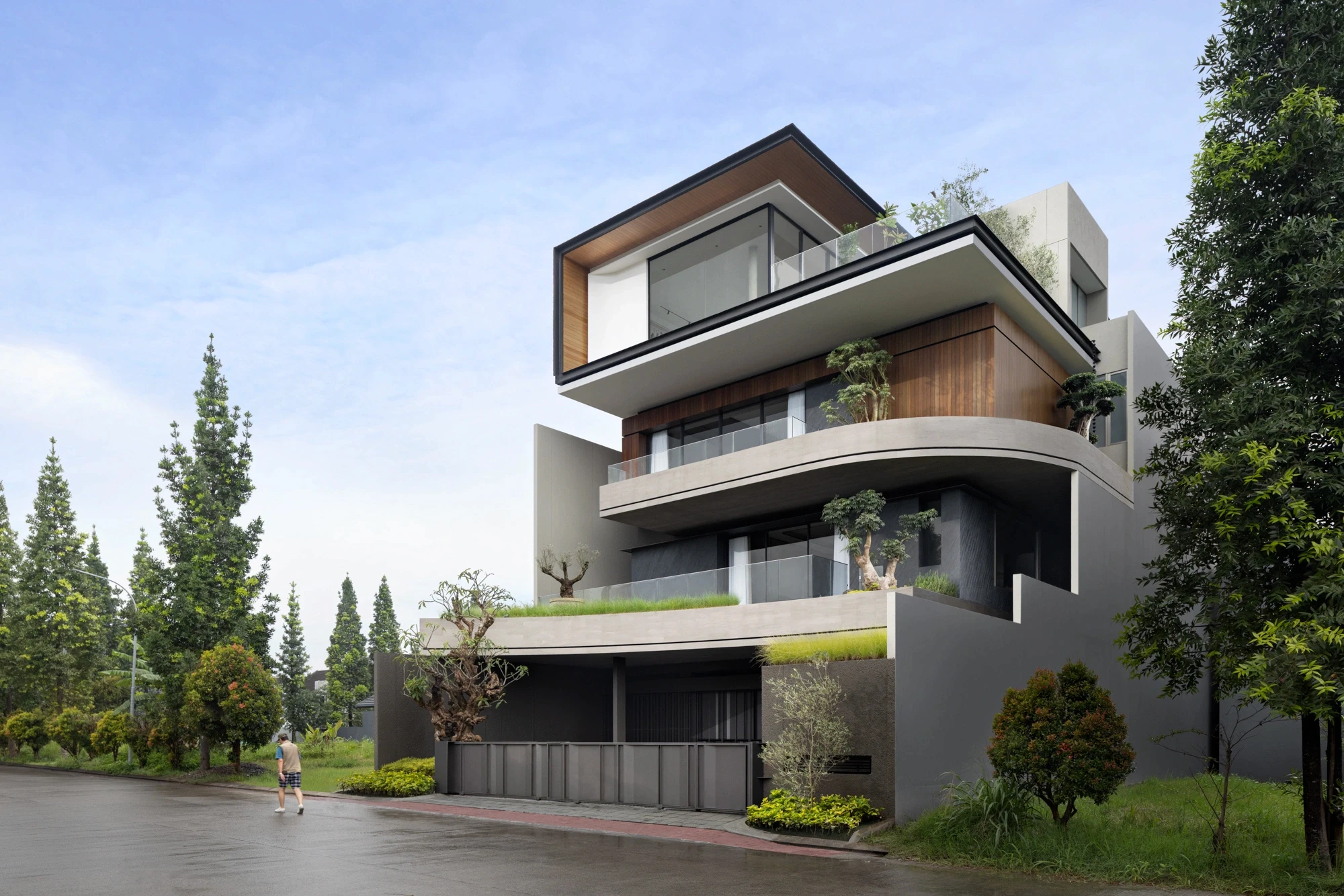
Verdura House is a multi-level residential construction built on a narrow and elongated site in Bandung. The project requires careful coordination between structural systems, environmental strategies, and spatial complexity to achieve a breathable, open-plan residence with integrated landscape elements.
Location
Bandung
Year
2025
Land Area
1.220,7 m²
Type
Residential
Project
Contractor
Construction is guided by the need to manage density without compromising openness. The building is divided into three structural masses connected by a central bridge, reducing continuous load spans and simplifying structural distribution across the site.
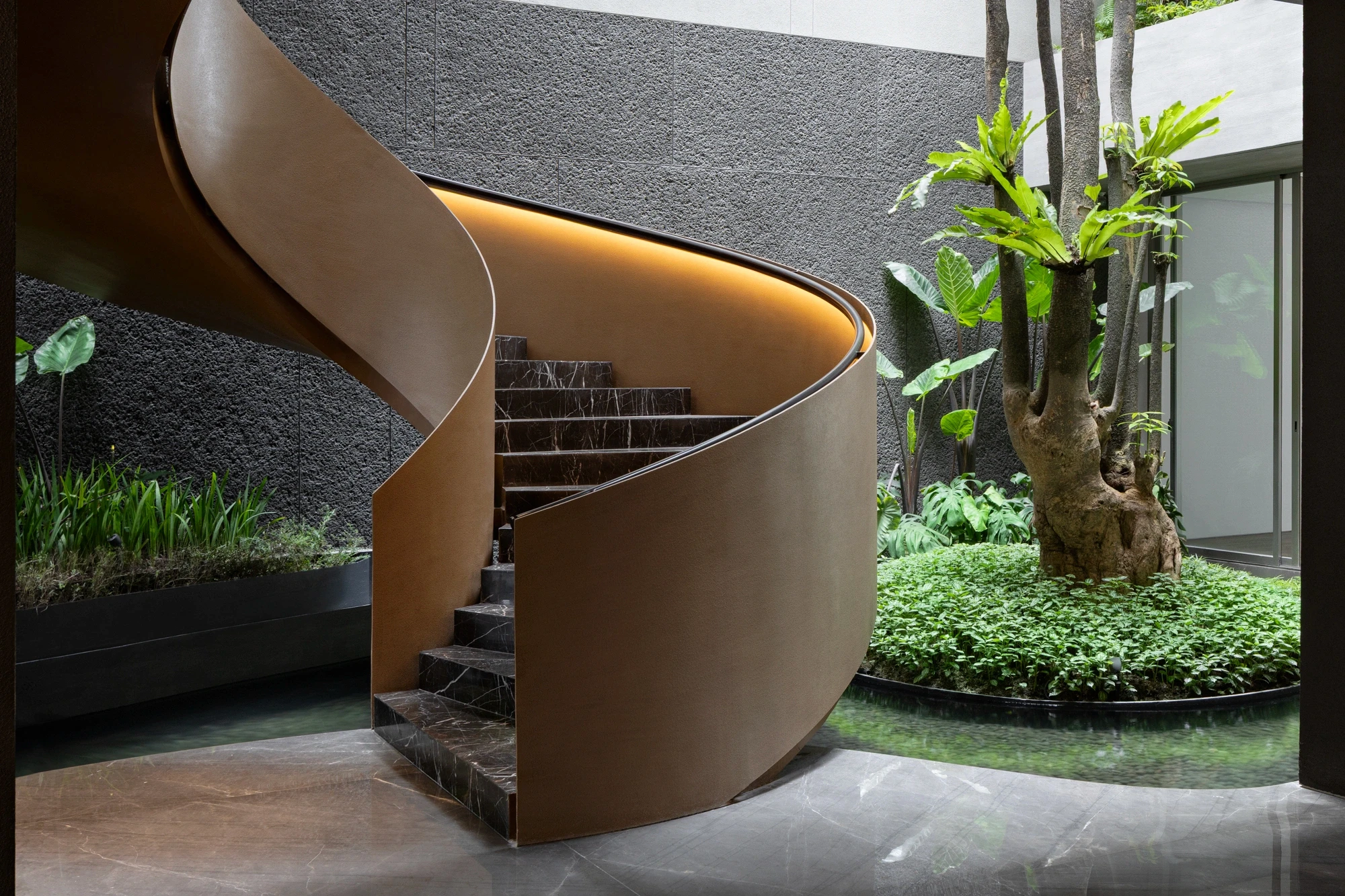
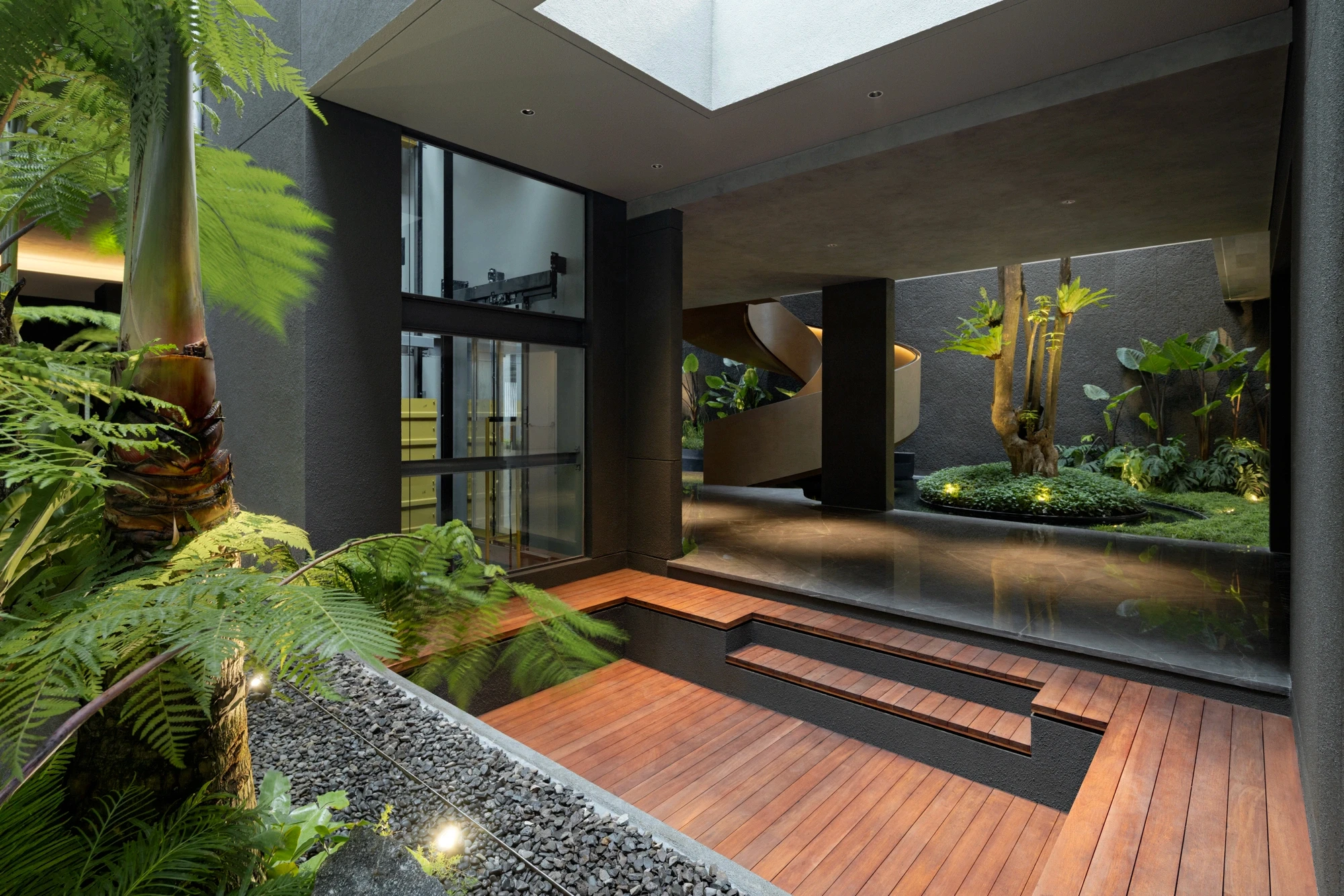
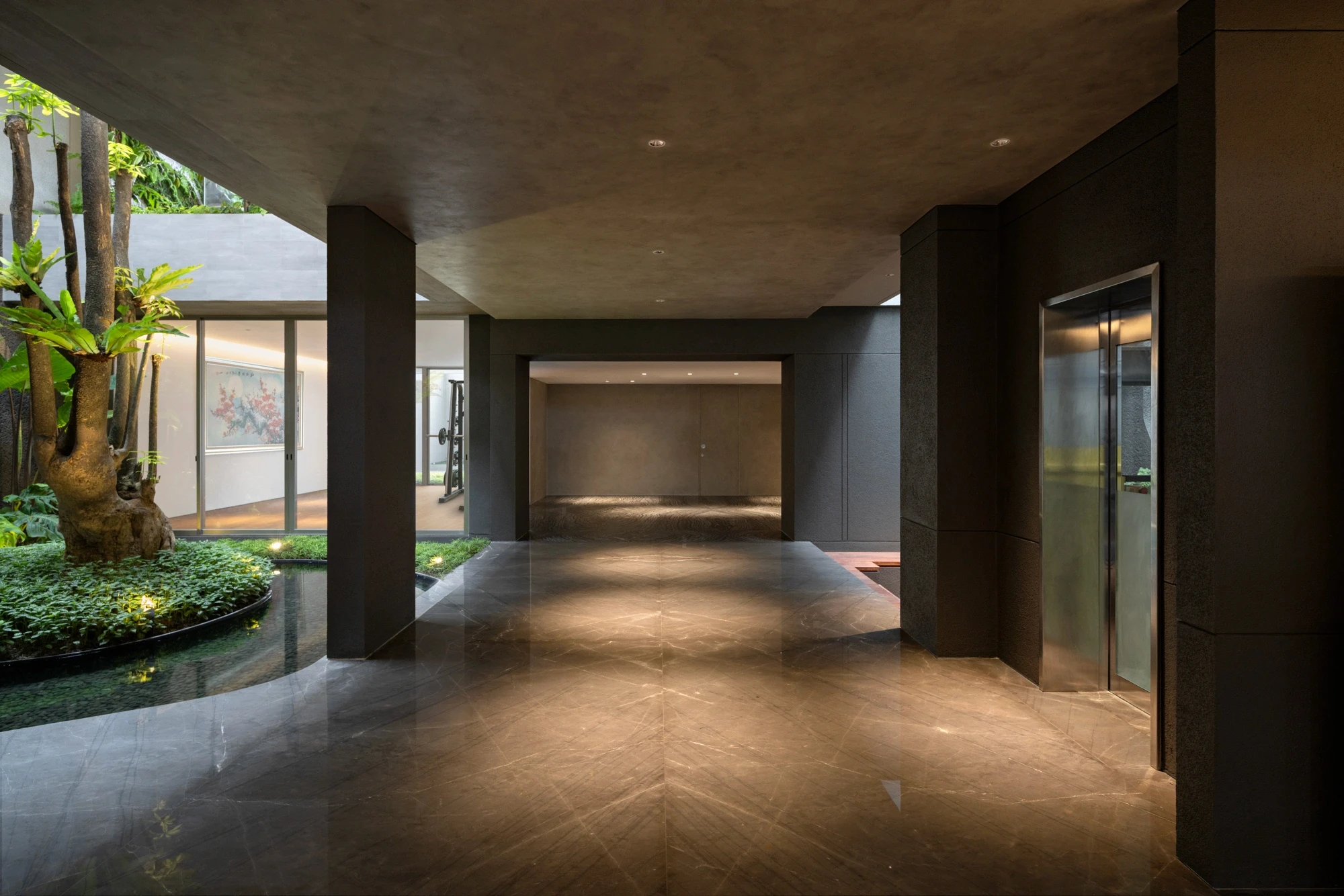
Multiple voids are introduced throughout the structure to accommodate internal gardens and improve ventilation. These voids require precise coordination between slabs, beams, and waterproofing systems to ensure durability while maintaining openness.
THE BUILD
The primary structure consists of reinforced concrete frames designed to support multi-level loads while accommodating large openings and vertical voids. Structural sequencing is critical, particularly at the central bridge and circulation core, where loads are transferred between separated masses. A key technical feature is the glass-bottom koi pond located above the reception area. This element requires specialized structural support, waterproofing layers, and glass installation to safely contain water loads while allowing light transmission below. Drainage and filtration systems are integrated to ensure long-term performance.
Façade construction follows a layered material strategy. Heavier, textured finishes are applied at lower levels for durability, while lighter cladding and timber elements are used above to reduce structural load and visual mass. Horizontal alignment of façade elements requires precise detailing to maintain consistency across the elongated elevation. Ventilation and natural lighting strategies are embedded into the construction. Openings, voids, and cross-ventilation paths are aligned during structural execution to ensure airflow is not obstructed by later installations.
THE RESULT
The completed construction achieves a balance between structural efficiency and spatial openness. Complex elements such as voids, bridges, and water features are executed with precision, ensuring long-term performance and minimal maintenance.
Verdura House stands as a technically resolved project where construction supports architectural intent, delivering a durable, breathable environment that integrates structure, light, and landscape into a cohesive whole.
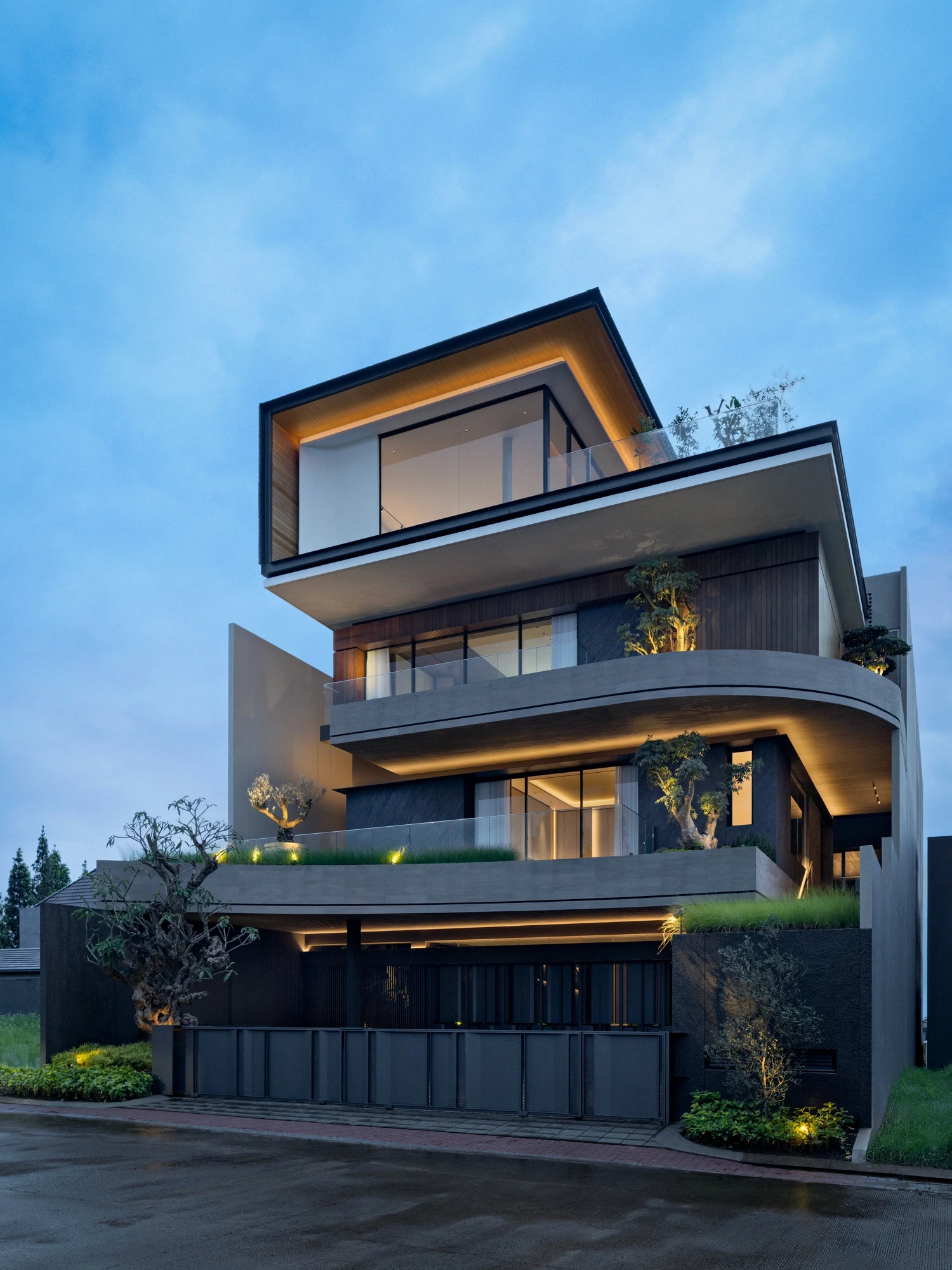
PHOTO GALLERY
A project of this depth deserves to be seen in full. We've brought together a complete visual record of Verdura House, every material, every view, every detail, for you to explore at your own pace.