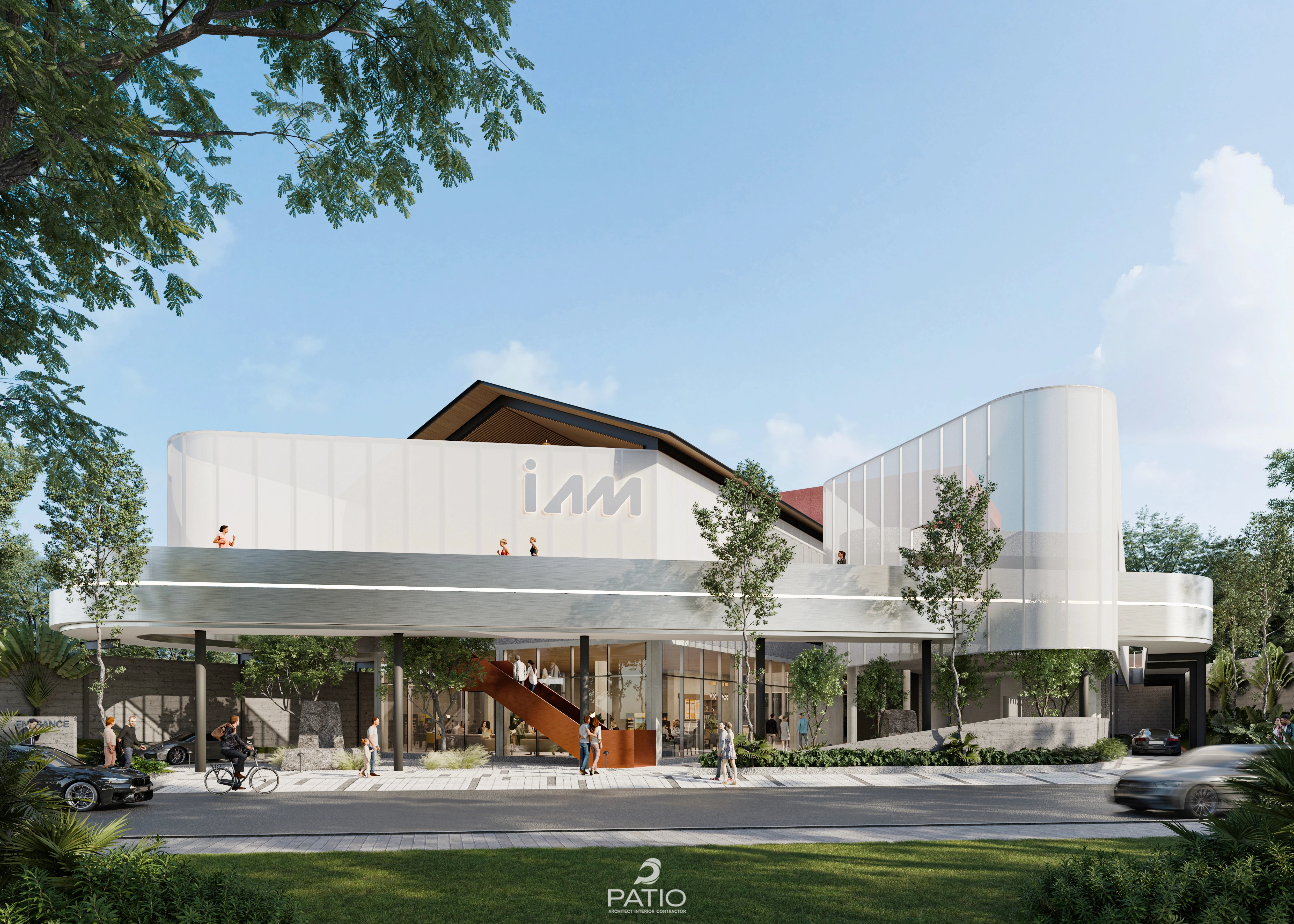
Parama Resort
PROJECT DESCRIPTION
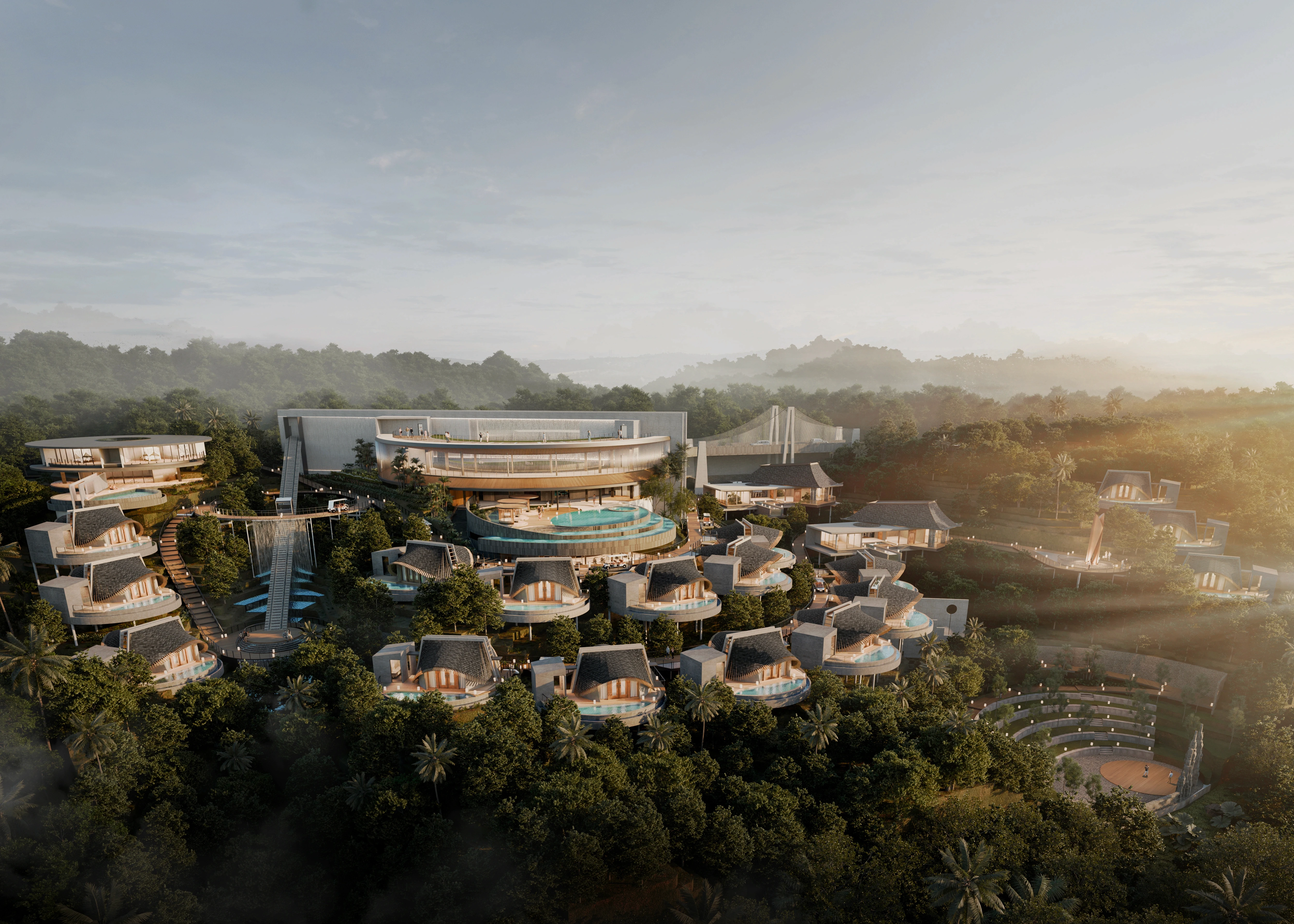
Prama Resort is conceived as a destination embedded within a mountainous landscape, where architecture unfolds along the natural topography. The project establishes a vertical masterplan that connects peak to base, transforming the steep terrain into a continuous spatial experience. Rather than reshaping the land, the design works with its contours, allowing built forms to emerge as extensions of the slope.
Location
Bali
Year
2025
Land Area
27.500 m²
Type
Hotel, Villa, Resort
Project
Architecture
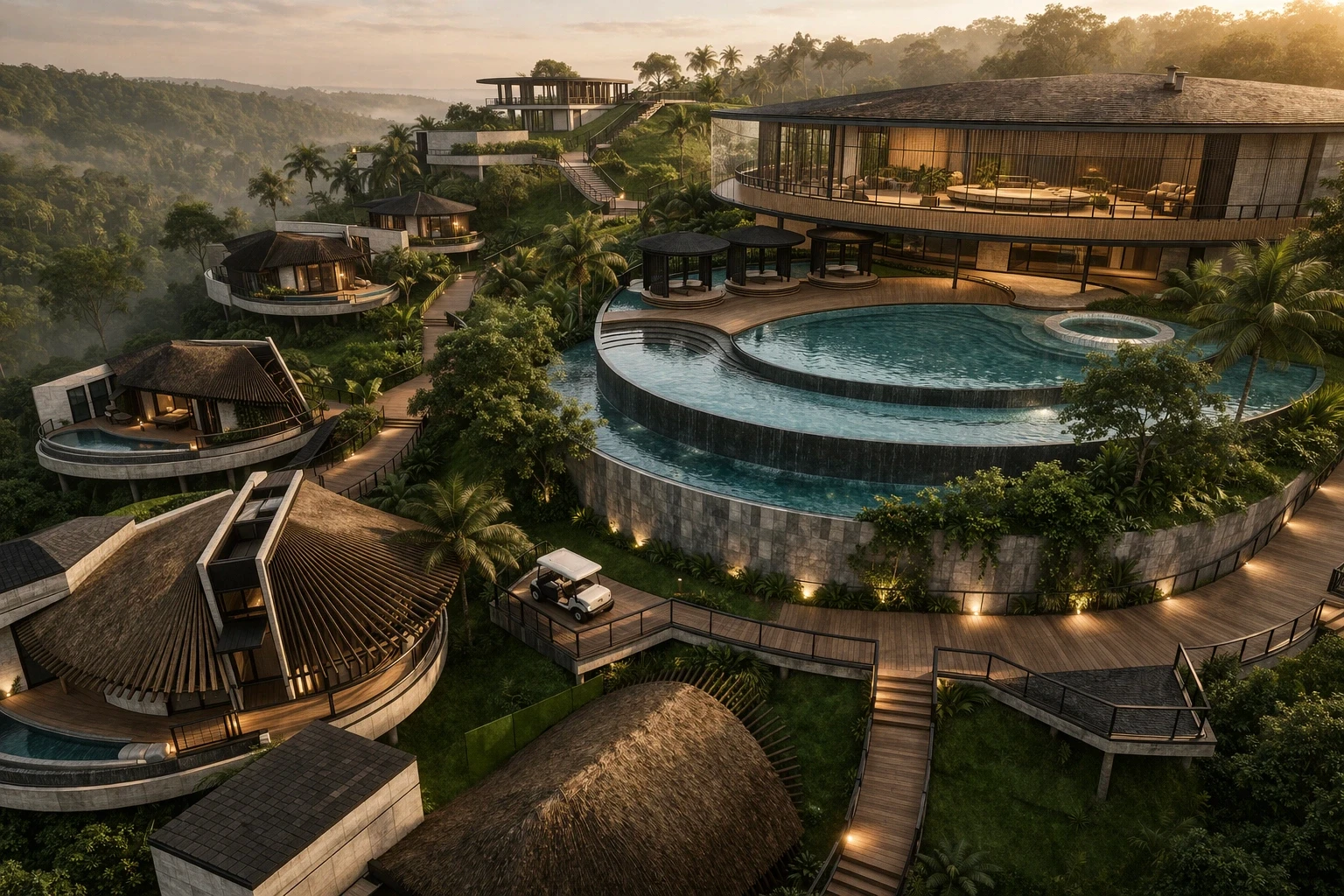
The architecture is guided by the idea of a journey. Movement through the resort is not only functional, but experiential. Each elevation introduces a different relationship between user and landscape, from expansive views to moments of enclosure and stillness. The project is designed as a sequence of pauses, where observation, reflection, and transition define the overall experience.
By distributing programs vertically, the resort balances social interaction and privacy. Public spaces occupy elevated positions with wider visual reach, while more intimate functions are embedded deeper into the landscape, creating a natural gradient of activity and retreat.
THE SPACE
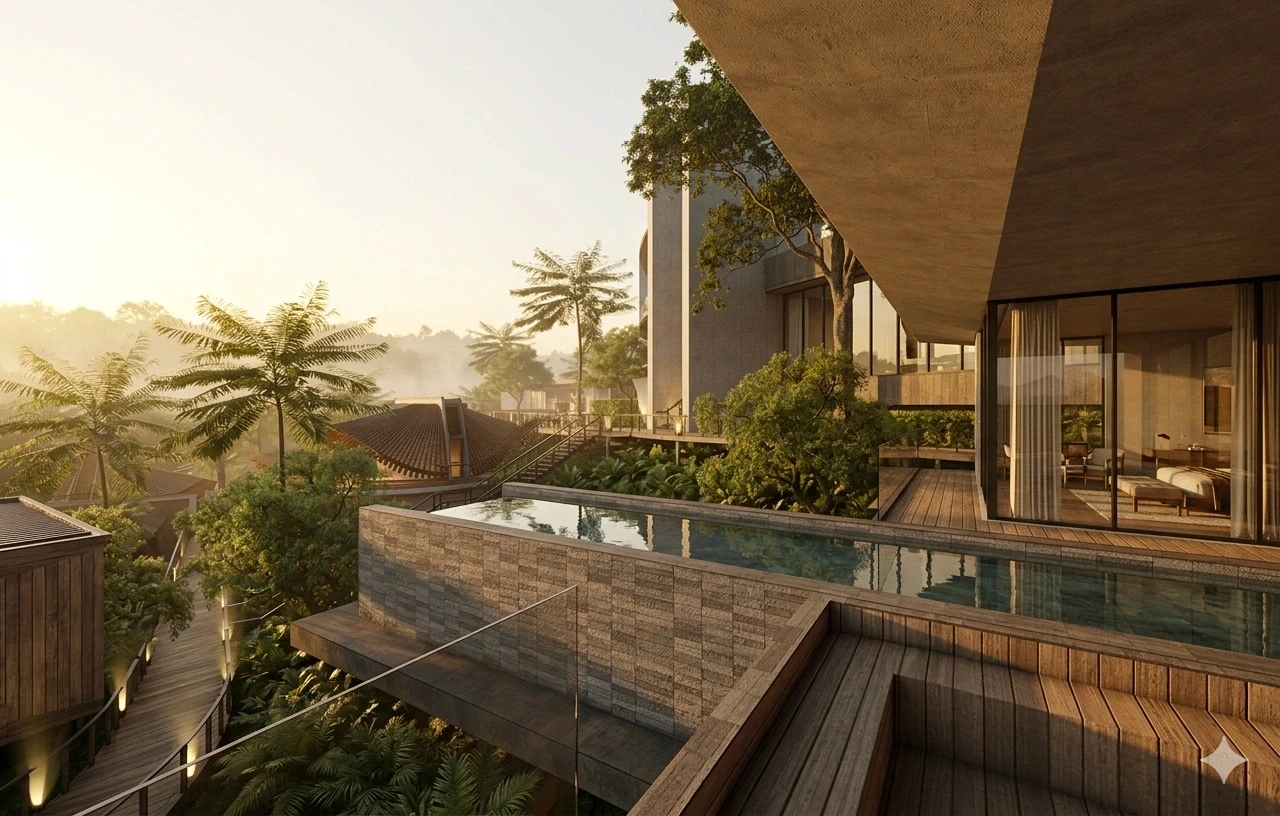
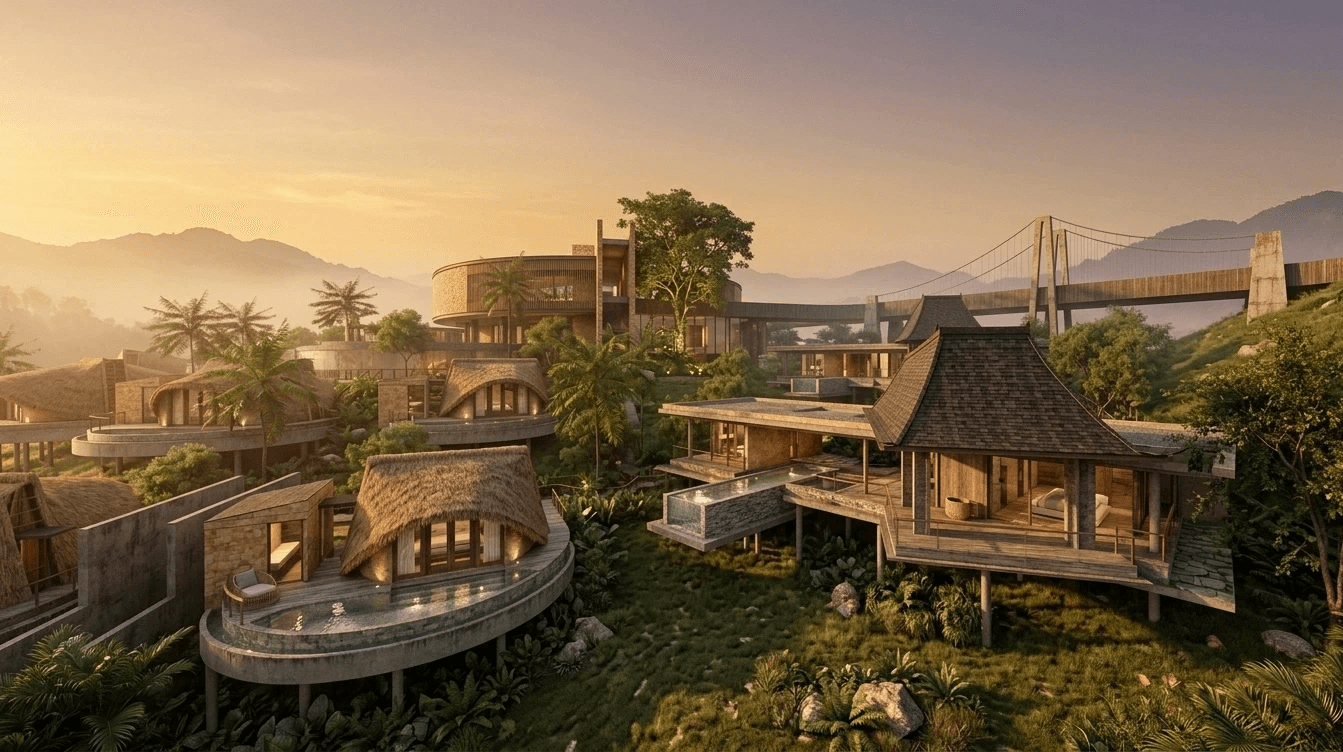
The masterplan is organized into four primary zones, each responding to a specific elevation and spatial intention.At the highest point, the arrival zone forms a threshold between the outside world and the resort. Elevated structures, including a central plaza and dining areas, extend above the tree line, offering immediate panoramic views and a sense of detachment from the surroundings beyond. Midway down the slope, residential villas are carefully positioned on stilts, adapting to the terrain while minimizing ground disturbance. Each unit is oriented toward the landscape, with private outdoor spaces and water elements that visually extend into the forest canopy.
At a more secluded vantage point, the presidential residence occupies a distinct position, designed for complete privacy and uninterrupted views across the valley. Its larger footprint and spatial layout emphasize independence and stillness. At the base, the terrain is shaped into a stepped amphitheater that follows the natural gradient of the land. This space functions as a communal and cultural anchor, where architecture and landscape merge into a singular form.
THE FEEL
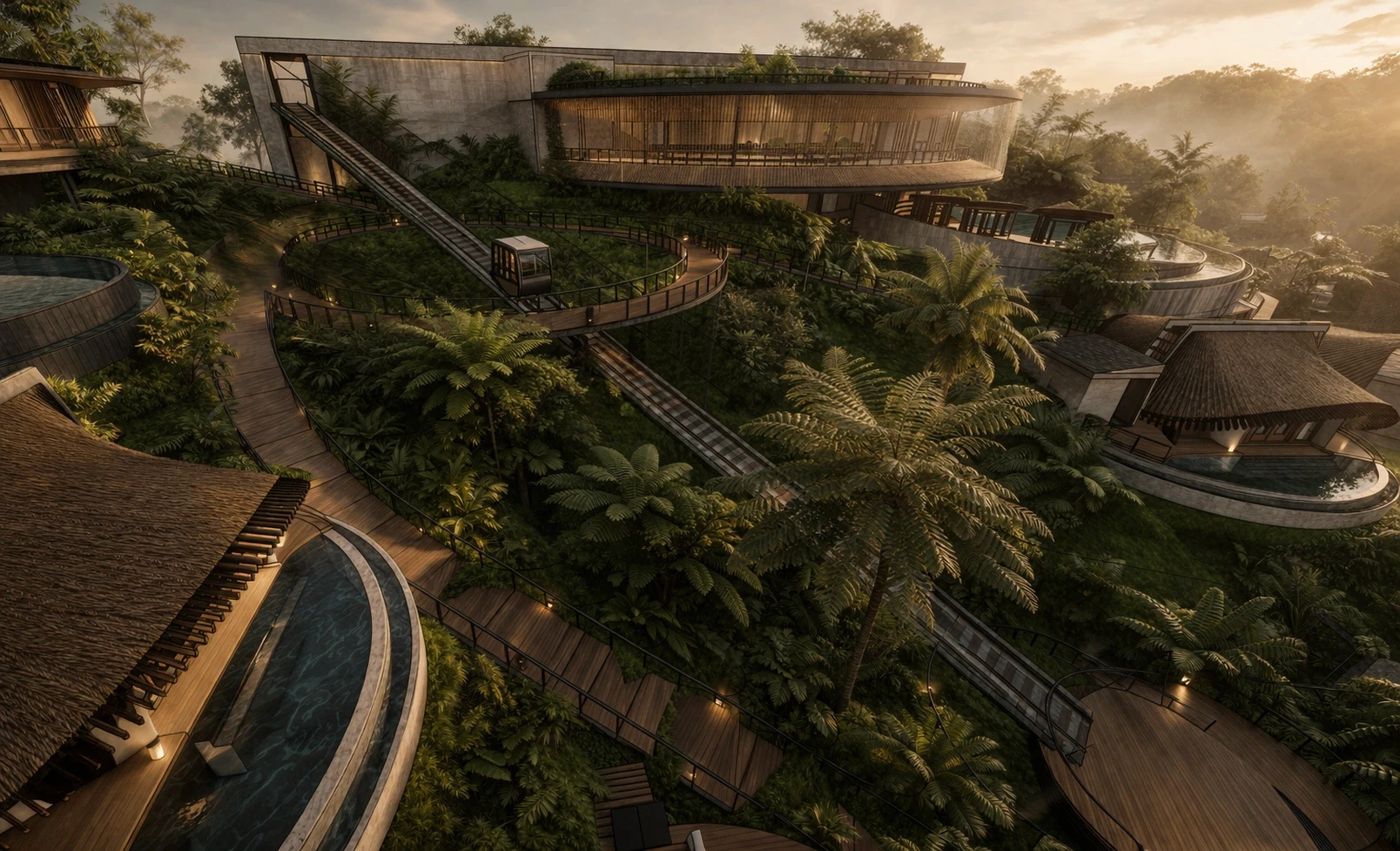
The architectural expression is defined by its relationship to the land. Structures are elevated, embedded, or carved depending on their position within the site. Materials and forms are selected to complement the surrounding environment, allowing the buildings to feel grounded without becoming visually dominant. Circulation becomes part of the experience. A glass-enclosed funicular system moves quietly along the slope, connecting upper and lower zones while maintaining a continuous visual connection to the landscape. Movement is gradual and immersive, reinforcing the sense of transition throughout the resort. The result is an architecture that does not sit on the mountain, but moves with it. Each space is shaped by elevation, view, and atmosphere, creating a resort that feels both expansive and deeply connected to its setting.
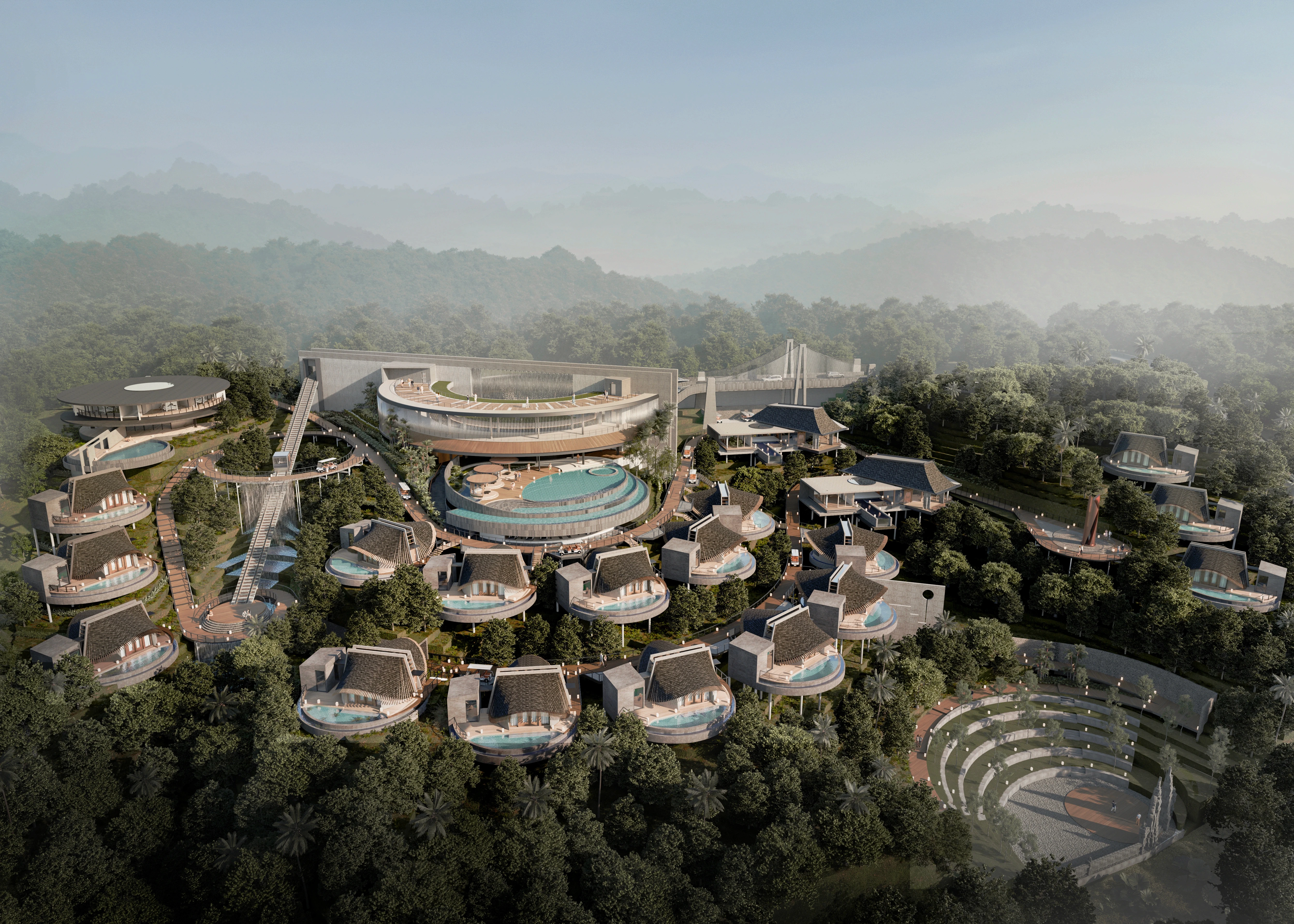
PHOTO GALLERY
A project of this depth deserves to be seen in full. We've brought together a complete visual record of Parama Resort, every material, every view, every detail, for you to explore at your own pace.