Nichi Izakaya Bar & Yakiniku
PROJECT DESCRIPTION
Nichi Izakaya Bar and Yakiniku is a commercial project in Bandung that transforms dining into a spatial journey. Set on a 620 m² site with a built area of 545 m², the architecture brings together Japanese design principles and tropical responsiveness within a clear and structured framework. The building is designed to support both guest experience and operational flow, where movement, visibility, and spatial hierarchy are carefully orchestrated. Each transition, from arrival to dining, is shaped to feel intentional, creating a balance between intimacy and openness within a commercial setting.
Location
Bandung
Year
2022
Land Area
620 m²
Type
Commercial
Project
Architecture

The architectural concept draws from the Five Elements, interpreting Earth, Water, Fire, Air, and Sky into spatial and environmental strategies. Garden landscapes and a reflective pool ground the building, while material warmth and controlled lighting introduce depth and contrast. The design seeks to harmonize the clarity of Japanese minimalism with the richness of Bandung’s tropical climate. Clean exterior forms are paired with layered, tactile interiors, creating an architecture that feels both restrained and expressive.


THE SPACE
Spatial organization is guided by circulation, light, and program efficiency. The entrance frames a gradual transition toward the central outdoor dining area, establishing a sequence that unfolds through layered zones. Public and semi-private spaces are arranged to maintain clarity while supporting a variety of dining experiences.
Natural light is introduced through strategic openings and a glass canopy, allowing vegetation and circulation paths to remain visually connected. Indoor and outdoor areas flow continuously, while service zones are positioned discreetly to maintain operational efficiency without disrupting the spatial experience.

THE FEEL
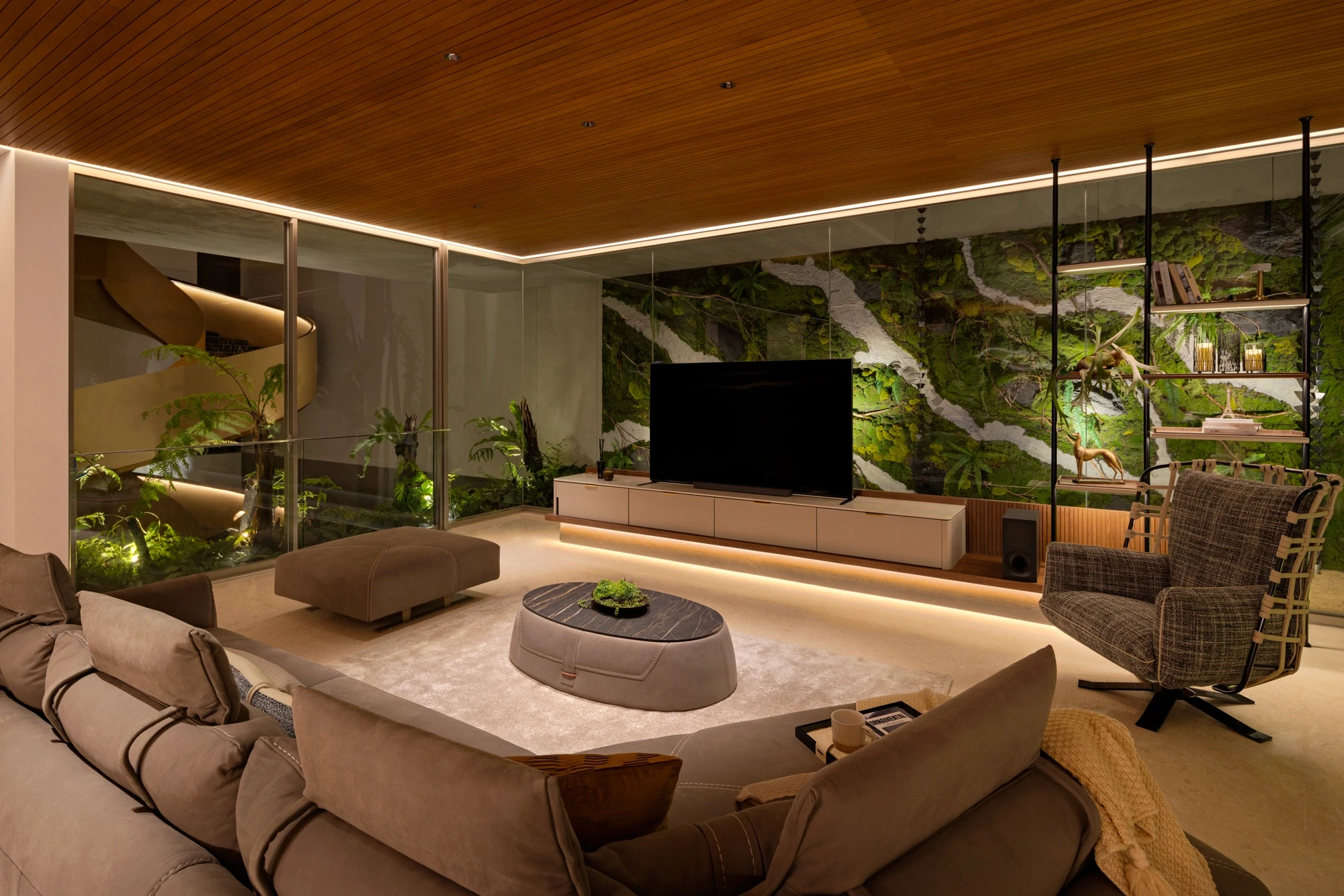
The architecture creates an atmosphere that is calm yet immersive. Solid forms are softened by natural materials and greenery, while controlled lighting introduces depth and contrast.
The result is a space that balances discipline and warmth, where Japanese minimalism meets tropical vitality. Every element contributes to an environment that feels composed, engaging, and distinctly memorable.
PHOTO GALLERY
A project of this depth deserves to be seen in full. We've brought together a complete visual record of NIchi Izakaya Bar Yakiniku, every material, every view, every detail, for you to explore at your own pace.