Verdura House
PROJECT DESCRIPTION
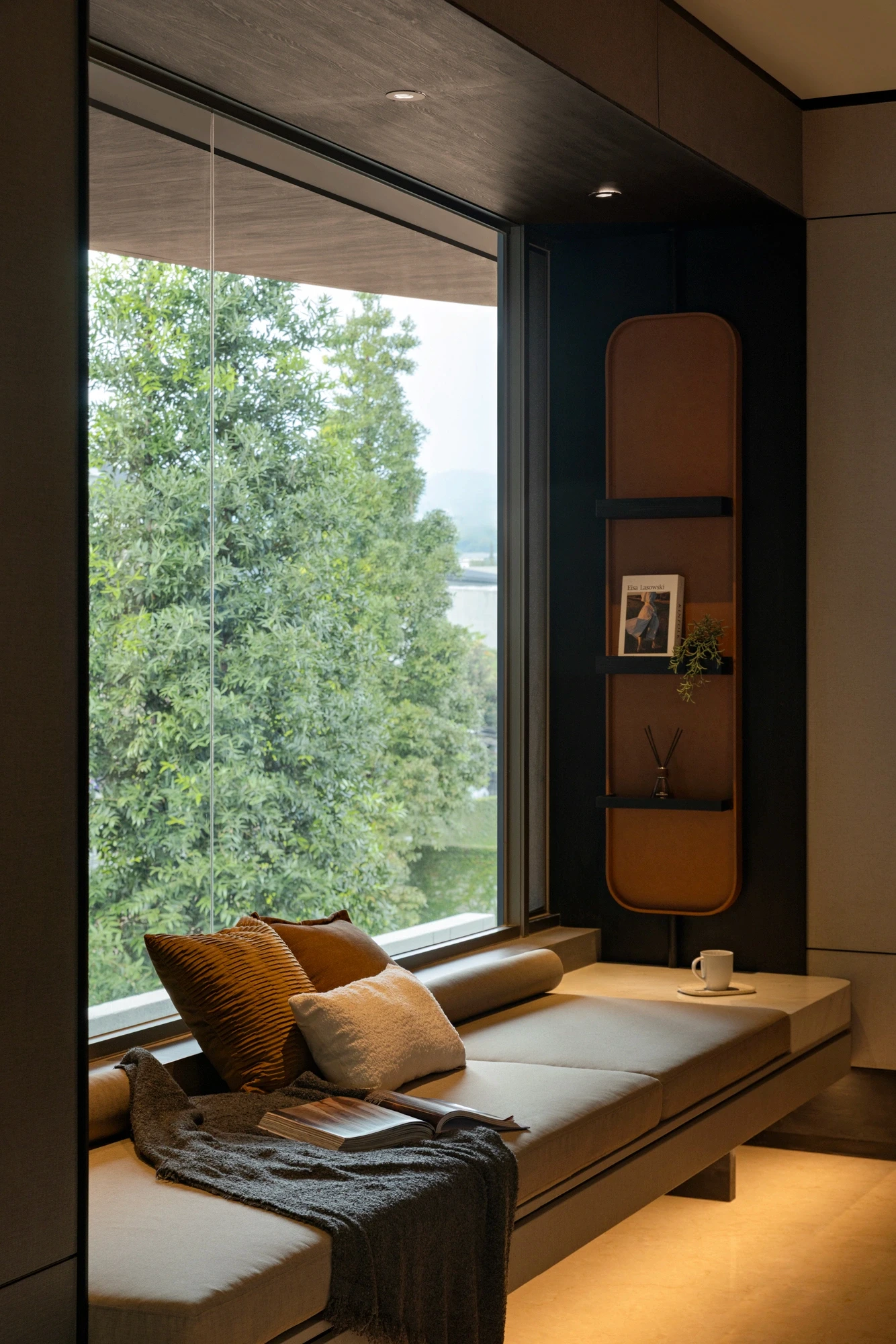
The interior of Verdura House extends the architectural concept of breathability into a lived experience. Designed as a sequence of connected environments the space prioritizes openness, comfort, and a constant dialogue with nature. Every room is shaped to feel light-filled, visually connected, and functionally clear.
Location
Bandung
Year
2025
Land Area
1.220,7 m²
Type
Residential
Project
Interior
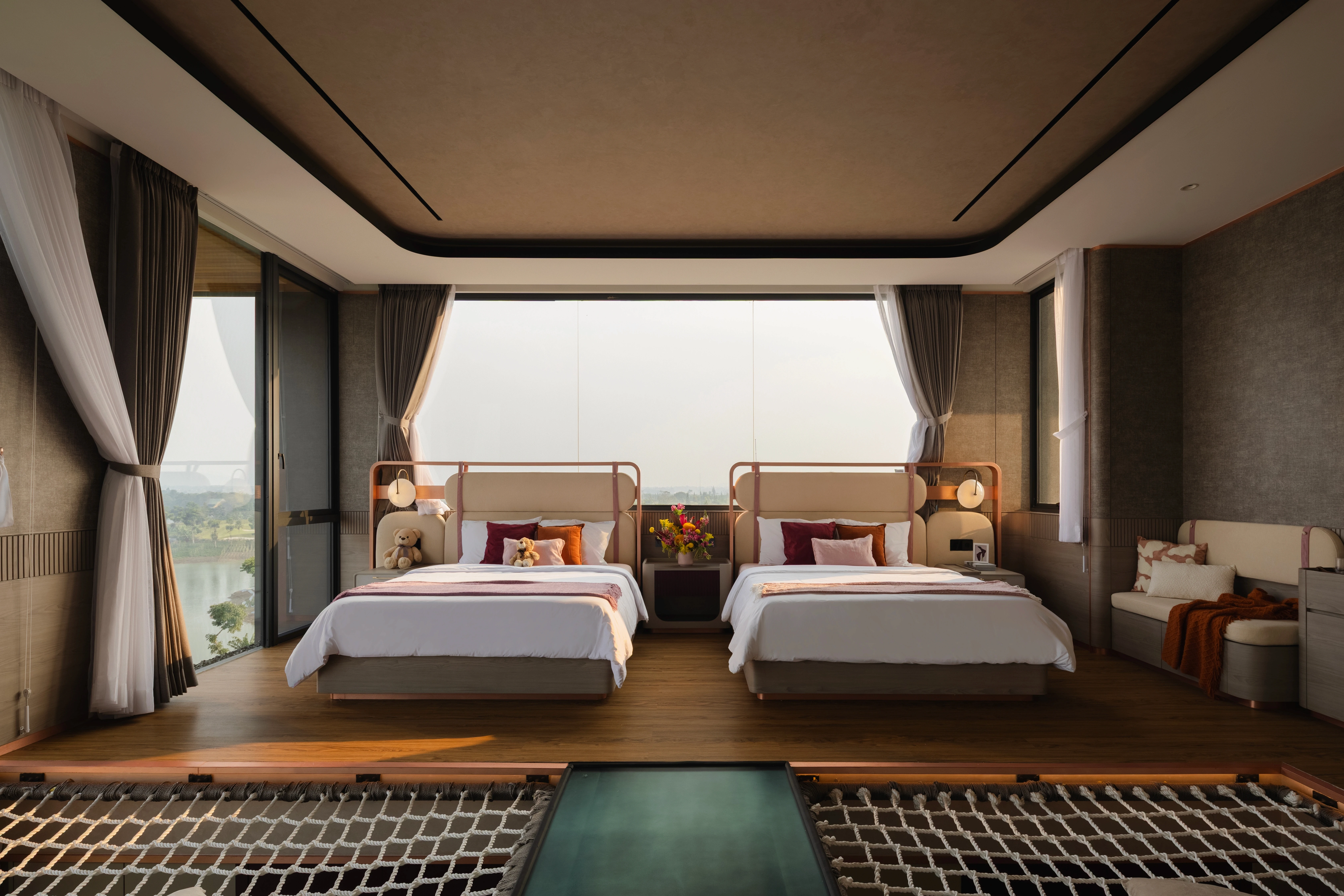
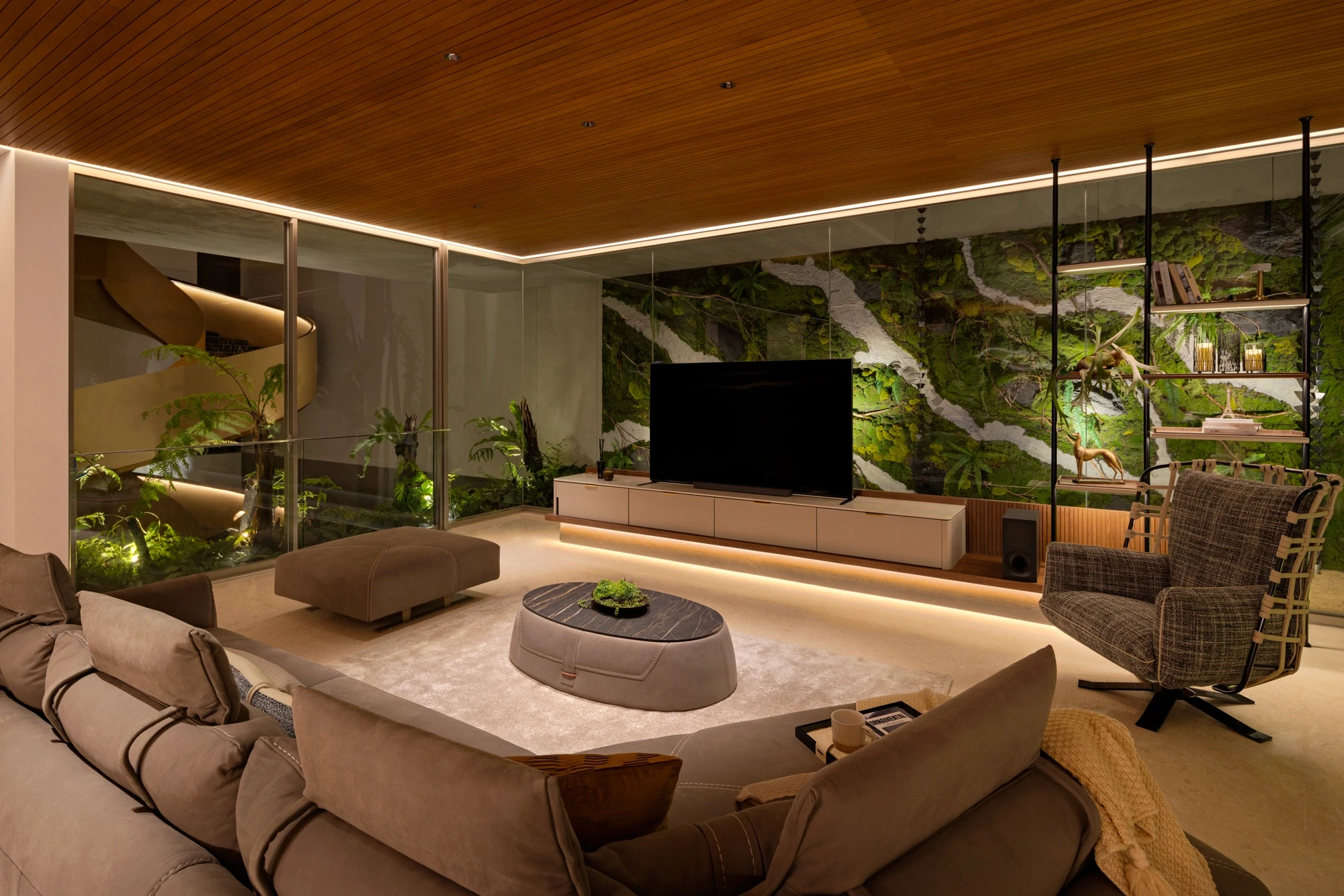
The interior approach focuses on clarity and continuity. Rather than creating isolated rooms, the design encourages visual and spatial connections across levels and zones. Natural elements such as gardens and water features are brought into daily experience, shaping how each space is perceived and used.
Material and color are used to support this openness. Darker tones at the lower levels create a grounded base, while lighter finishes and natural textures on upper floors enhance brightness and calm. The goal is to create an atmosphere that feels refined without being overwhelming.
THE SPACE
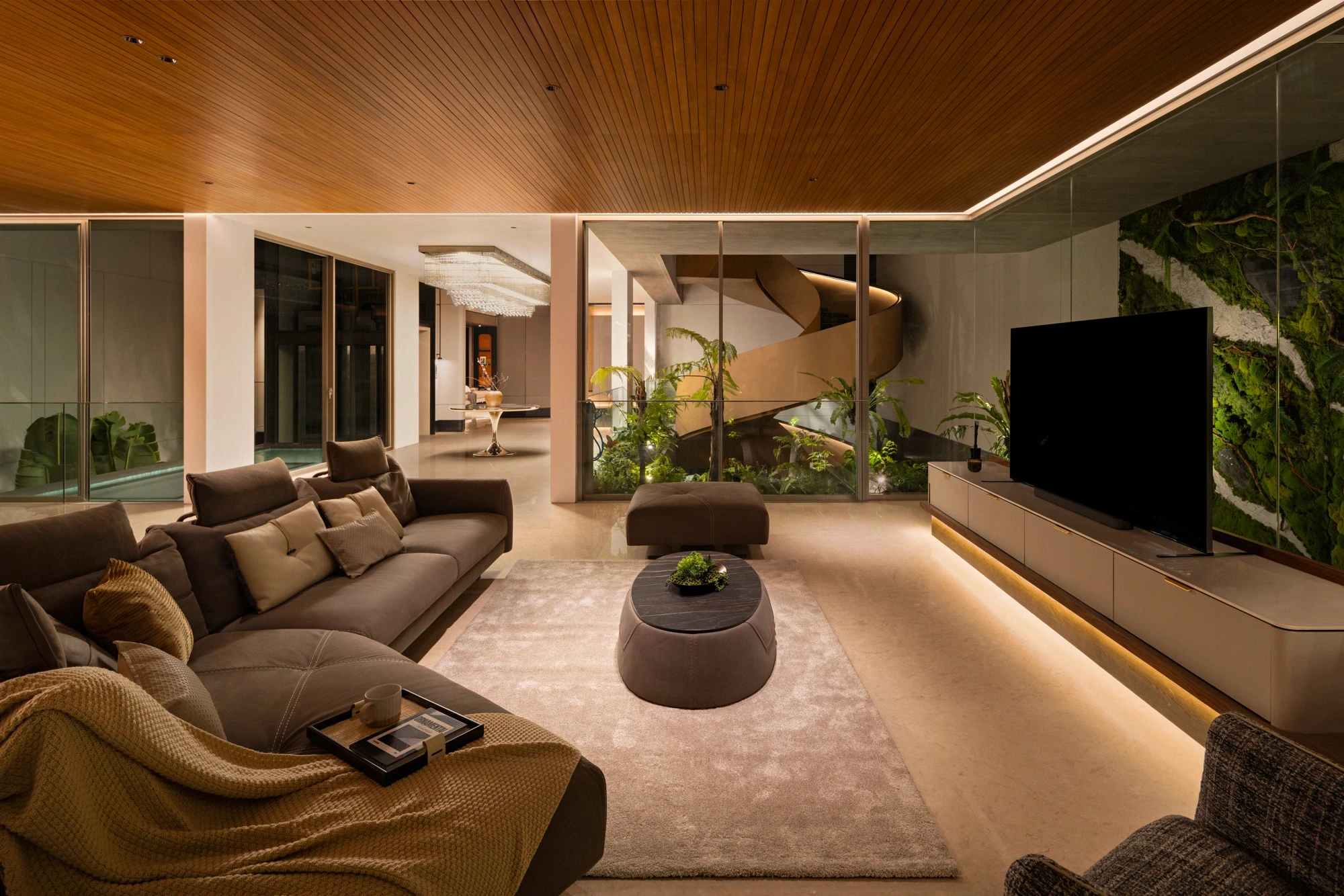
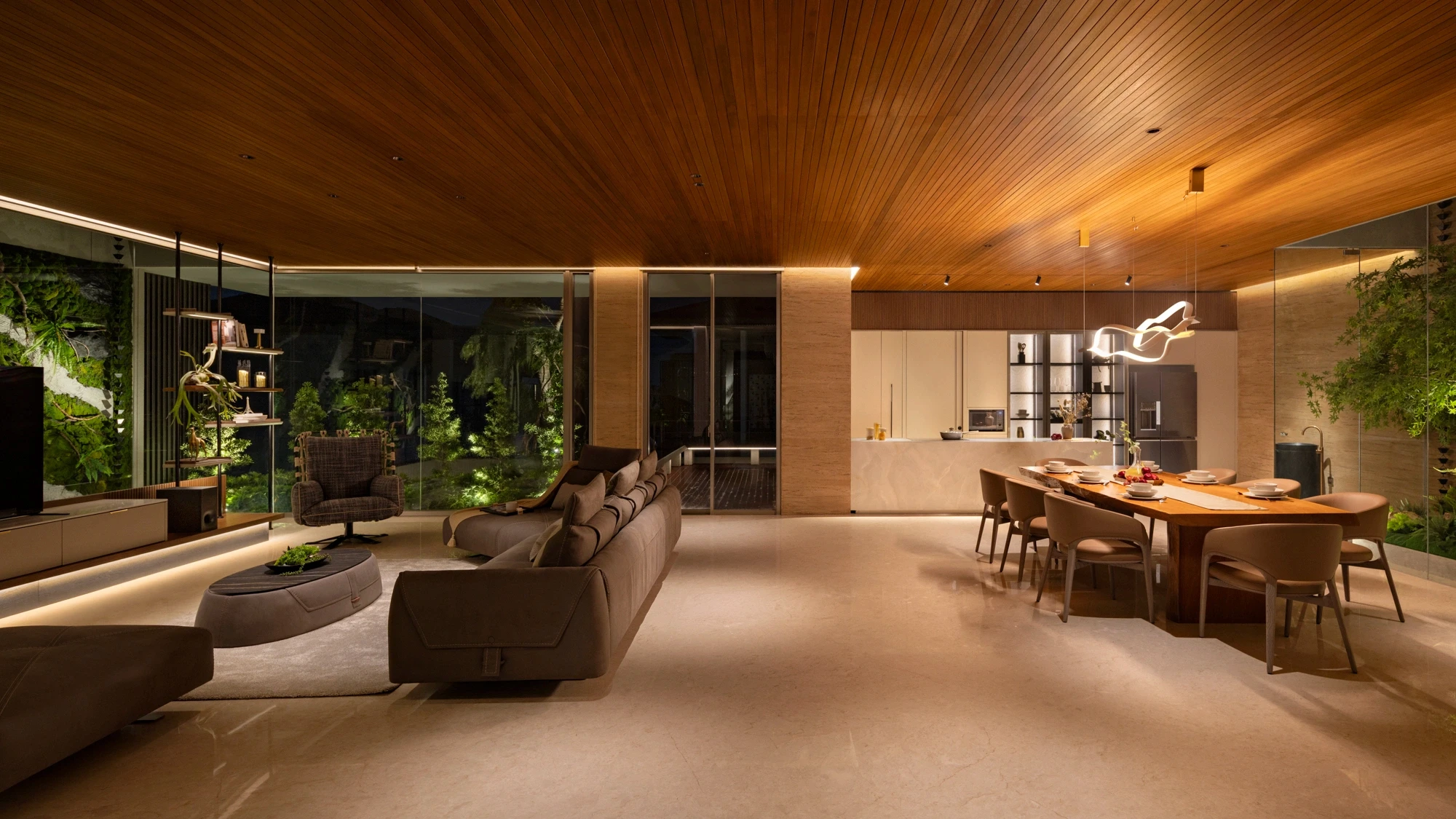
The entry sequence introduces the interior through a layered experience. A reception area on the ground floor is illuminated by a glass-bottom koi pond above, where filtered light and water reflections animate the space throughout the day. This element connects the lower and upper levels visually and atmospherically. The main living areas are positioned on the upper floor, where openness is maximized.
Spaces flow into one another, supported by large openings and views toward internal gardens. The central bridge and vertical voids maintain visual continuity, ensuring that movement through the house remains fluid. A sculptural spiral staircase anchors the interior composition. Finished in a bronze tone, it serves both as circulation and as a focal point, introducing a sense of identity within the otherwise restrained palette.
THE FEEL
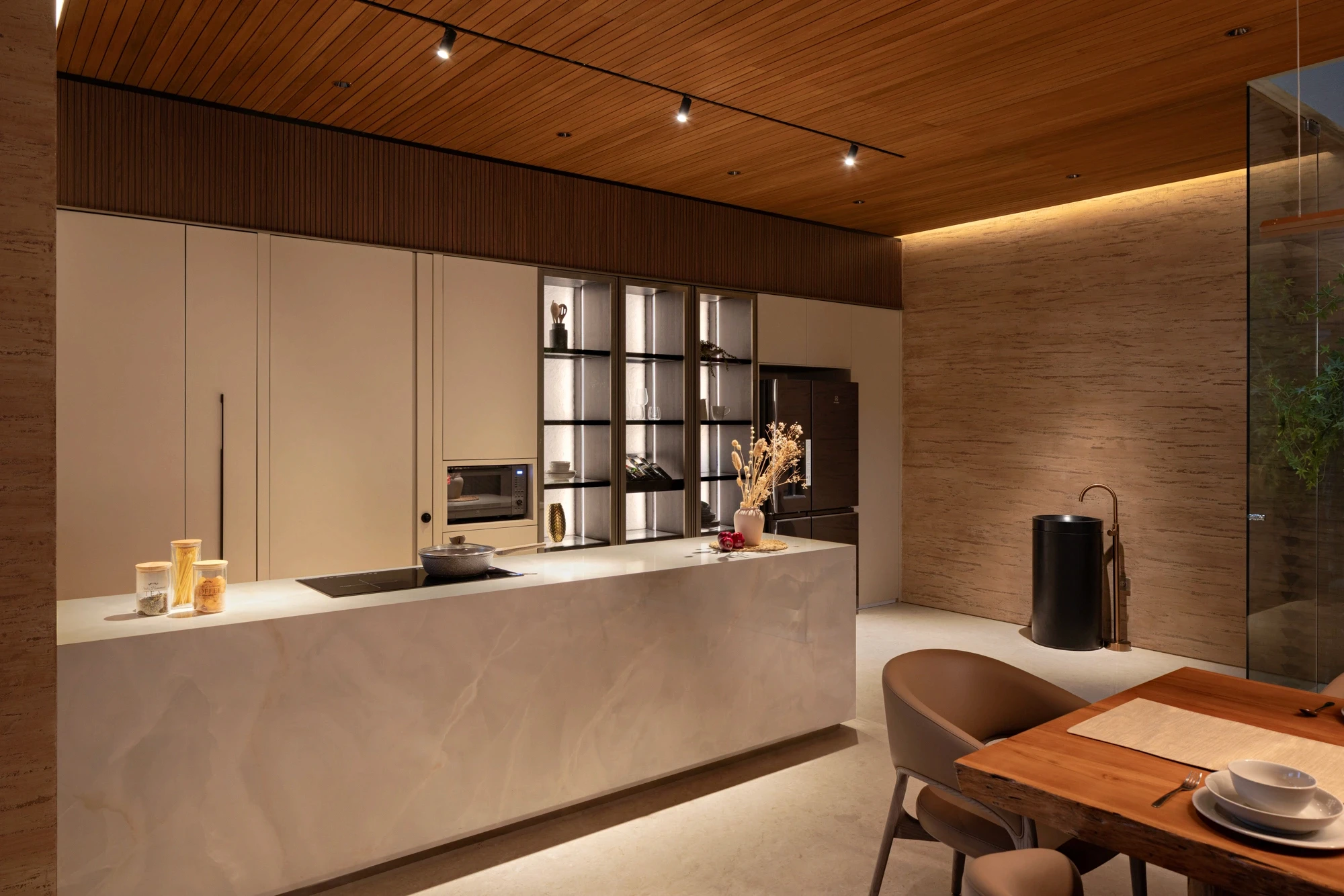
The interior atmosphere is defined by lightness and depth. Natural light filters through openings, voids, and water, creating a constantly shifting environment. Materials are selected for their tactile quality, balancing smooth surfaces with textured elements.
The result is a space that feels composed and alive. It is both functional and expressive, where everyday living is shaped by subtle interactions between light, material, and nature.
PHOTO GALLERY
A project of this depth deserves to be seen in full. We've brought together a complete visual record of Verdura House, every material, every view, every detail, for you to explore at your own pace.